
Patanjali Sutras PDF: A Comprehensive Article Plan
Exploring readily available PDF versions of the Yoga Sutras‚ including translations by Satchidananda and Bryant‚ facilitates deeper study of Patanjali’s foundational text.
The Yoga Sutras of Patanjali represent a cornerstone of classical yoga philosophy‚ offering a systematic guide to achieving self-realization. Compiled sometime between the 2nd century BCE and the 4th century CE‚ this text outlines the path of Ashtanga Yoga – an eight-limbed system designed to quiet the fluctuations of the mind.
Access to these ancient teachings is now remarkably convenient‚ with numerous PDF versions available online. These digital formats allow students worldwide to engage with Patanjali’s wisdom‚ regardless of location or access to physical copies. The 196 sutras‚ clustered into sections for clarity‚ provide a framework for understanding and practicing yoga beyond physical postures.
Modern seekers often begin their journey with translated PDFs‚ benefiting from the insights of scholars like Swami Satchidananda and Edwin F. Bryant‚ who offer accessible interpretations of the Sanskrit text.
Historical Context and Authorship
Determining the precise historical context and authorship of the Yoga Sutras remains a subject of scholarly debate. While traditionally attributed to the sage Patanjali‚ little is definitively known about the author’s life. Estimates place the compilation of the sutras between the 2nd century BCE and the 4th century CE‚ a period of flourishing philosophical thought in India.
The availability of PDF versions doesn’t alter this historical ambiguity but does broaden access to interpretations attempting to contextualize the work. Understanding the era – influenced by Samkhya philosophy – is crucial for interpreting the sutras’ core concepts.
Digital access through PDFs allows researchers and students to compare various scholarly perspectives on Patanjali’s identity and the text’s origins‚ fostering a more nuanced understanding.
The Significance of the Sutra Format
The Yoga Sutras are presented in a concise‚ aphoristic style – known as sutras – meaning “thread” or “formula.” This format wasn’t chosen arbitrarily; it’s designed for memorization and layered understanding; Each sutra encapsulates a profound principle‚ requiring contemplation and commentary for full comprehension.
PDF versions often include these commentaries alongside the Sanskrit and translations‚ enhancing accessibility. The succinctness of the sutra format necessitates careful study‚ and digital formats facilitate easy comparison of different interpretations.
This condensed style also allows for adaptability across various schools of yoga‚ making the PDF accessible to diverse practitioners seeking foundational wisdom.
Availability of Patanjali Sutras in PDF Format
Numerous PDF versions of the Patanjali Yoga Sutras are readily available online‚ catering to diverse learning preferences. Websites dedicated to yoga philosophy‚ digital libraries‚ and individual translators’ sites offer downloadable copies.
These PDFs range from simple text versions of the Sanskrit sutras to comprehensive editions including transliteration‚ word-for-word meanings‚ translations‚ and detailed commentaries. Platforms like the Internet Archive host digitized versions of classic translations;
The accessibility of these digital resources democratizes access to this foundational text‚ allowing students worldwide to engage with Patanjali’s wisdom at their own pace.
Popular PDF Versions and Translations
Several PDF translations of the Patanjali Yoga Sutras stand out for their clarity and scholarly approach. Swami Satchidananda’s version is widely appreciated for its accessibility and practical guidance‚ making it ideal for beginners.

Edwin F. Bryant’s translation is favored by academics for its rigorous scholarship and detailed commentary‚ offering a deeper understanding of the sutras’ philosophical nuances. Other notable translations include those by B.K.S. Iyengar and Chip White.

These PDFs often include the original Sanskrit text alongside the translation‚ enabling comparative study and a richer learning experience.
Swami Satchidananda’s Translation
Swami Satchidananda’s interpretation of the Yoga Sutras‚ readily available in PDF format‚ is celebrated for its comprehensive and accessible approach. It’s designed for modern readers seeking practical application alongside philosophical understanding.
His translation emphasizes the experiential aspect of yoga‚ guiding practitioners through the eight limbs with clarity. The PDF often includes detailed explanations and insights‚ making complex concepts easier to grasp. It’s a popular choice for both beginners and experienced yogis.
This version fosters a holistic understanding‚ bridging ancient wisdom with contemporary life.
Edwin F. Bryant’s Translation
Edwin F. Bryant’s translation of the Yoga Sutras‚ frequently found as a PDF‚ is highly regarded for its scholarly rigor and detailed commentary. He presents Patanjali’s Sanskrit text alongside word-for-word meanings‚ a simplified approach‚ and his own insightful interpretations.
Bryant’s work caters to those seeking a deeper‚ more nuanced understanding of the text’s philosophical underpinnings. The PDF version often includes extensive notes and cross-references‚ enriching the study experience.
His approach prioritizes fidelity to the original Sanskrit‚ offering a valuable resource for serious students and scholars of yoga philosophy.
Other Notable Translations
Beyond Satchidananda and Bryant‚ numerous other translations of the Yoga Sutras are available in PDF format‚ each offering a unique perspective. These versions cater to diverse learning styles and levels of experience.
Many translations prioritize accessibility for modern readers‚ while others maintain a more literal rendering of the Sanskrit. Exploring these alternatives can deepen comprehension and reveal subtle nuances within the text.
Researchers and practitioners often benefit from comparing different interpretations‚ gaining a more holistic understanding of Patanjali’s teachings. Digital PDF access facilitates this comparative study.
Core Concepts within the Sutras
Central to the Yoga Sutras are foundational concepts like the Three Gunas – Sattva‚ Rajas‚ and Tamas – which describe the qualities shaping the natural world and human experience. Understanding these forces is crucial for self-awareness.
Furthermore‚ the concept of Samadhi‚ a state of complete absorption‚ represents the ultimate goal of yoga practice‚ as outlined in readily available PDF versions of the text. The Sutras detail pathways to achieve this profound state.
Patanjali also addresses the influence of Karma‚ explaining how past actions shape present circumstances and future possibilities‚ offering a framework for ethical living and spiritual growth.
The Three Gunas: Sattva‚ Rajas‚ and Tamas
According to Yoga philosophy‚ as detailed in PDF versions of the Yoga Sutras‚ all of nature is comprised of three fundamental qualities: Sattva‚ Rajas‚ and Tamas. Sattva embodies purity‚ clarity‚ and equilibrium‚ fostering peace and knowledge.
Rajas represents activity‚ passion‚ and change‚ driving ambition and attachment. Tamas signifies darkness‚ inertia‚ and resistance‚ leading to delusion and stagnation. These Gunas constantly interact‚ influencing our thoughts‚ emotions‚ and actions.
Patanjali’s teachings emphasize cultivating Sattva through practices like meditation and ethical living‚ aiming to transcend the limitations imposed by Rajas and Tamas‚ ultimately leading to liberation.
Understanding the Concept of Samadhi
As explored within PDF versions of the Yoga Sutras‚ Samadhi represents the ultimate goal of yoga – a state of complete absorption and union with consciousness. It’s achieved through consistent practice of the eight limbs (Ashtanga Yoga)‚ quieting the fluctuations of the mind.
Patanjali describes various levels of Samadhi‚ from initial stages involving object-based concentration to profound states of pure awareness. This isn’t merely a meditative experience‚ but a transformative shift in perception‚ dissolving the sense of self.
Reaching Samadhi signifies liberation (Kaivalya)‚ freeing one from suffering and the cycle of rebirth‚ as detailed in the Sutras’ insightful teachings.
The Role of Karma and its Influence
PDF studies of the Yoga Sutras reveal a nuanced understanding of Karma – not as fatalistic destiny‚ but as action and consequence shaping our experiences. Patanjali explains how past actions create impressions (samskaras) influencing present tendencies and future outcomes.
These impressions bind us to the cycle of suffering (samsara). Through mindful action‚ ethical conduct (Yamas & Niyamas)‚ and dedicated practice‚ we can purify these karmic imprints.
The Sutras suggest that by understanding Karma’s mechanics‚ and cultivating detachment‚ we lessen its hold‚ paving the way for liberation and a more conscious existence‚ as detailed within accessible PDF translations.
Ashtanga Yoga: The Eight Limbs
Patanjali’s Yoga Sutras‚ readily available in PDF format‚ systematically outline Ashtanga Yoga – the eightfold path to self-realization. This isn’t merely physical postures‚ but a holistic system.
It begins with Yamas (ethical restraints) and Niyamas (observances)‚ establishing a moral foundation. Asana (postures) and Pranayama (breath control) prepare the body and mind.
Pratyahara (sense withdrawal)‚ Dharana (concentration)‚ Dhyana (meditation)‚ and culminating in Samadhi (absorption) refine focus‚ leading to profound awareness. PDF resources detail each limb‚ offering practical guidance for modern practitioners seeking a comprehensive yogic path.
Yamas (Ethical Restraints)
Within the Yoga Sutras‚ accessible through numerous PDF versions‚ the Yamas represent the foundational ethical guidelines for yogic living. These restraints – non-violence (Ahimsa)‚ truthfulness (Satya)‚ non-stealing (Asteya)‚ continence (Brahmacharya)‚ and non-possessiveness (Aparigraha) – cultivate a harmonious relationship with the external world.
PDF study guides emphasize that mastering Yamas isn’t about rigid rules‚ but internalizing principles. They form the bedrock for mental clarity and emotional stability‚ essential for progressing on the eightfold path. Patanjali stresses their voluntary adoption‚ fostering a decent moral state.
Niyamas (Observances)
Complementing the Yamas‚ readily explored in PDF versions of the Yoga Sutras‚ the Niyamas are internal observances that cultivate self-discipline and inner purity. These include cleanliness (Saucha)‚ contentment (Santosha)‚ austerity (Tapas)‚ self-study (Svadhyaya)‚ and surrender to a higher power (Ishvara Pranidhana).
Patanjali’s teachings‚ as detailed in accessible PDF resources‚ highlight Niyamas as refining forces. They aren’t imposed duties‚ but practices fostering a positive internal environment. Consistent observance‚ alongside the Yamas‚ prepares the mind for focused yoga practice and ultimately‚ absorption in pure awareness – Samadhi.
Asana (Postures)
Within the eight limbs of Ashtanga Yoga‚ detailed in numerous PDF versions of the Yoga Sutras‚ Asana – physical postures – are presented not merely as exercise‚ but as a means to cultivate steadiness and ease. Patanjali emphasizes the posture should be sthira sukham asanam – stable and comfortable.
Accessible PDF guides demonstrate how Asana prepares the body for prolonged meditation. While modern yoga often emphasizes complex poses‚ the Sutras prioritize a posture that allows for focused breath and a quiet mind. This foundational aspect‚ readily available in translated PDFs‚ is crucial for progressing along the yogic path.
Pranayama (Breath Control)
Following Asana‚ Pranayama – breath control – forms a vital component of Ashtanga Yoga‚ extensively detailed within PDF versions of the Yoga Sutras. Patanjali outlines Pranayama as regulating the flow of breath to steady the mind‚ preparing it for deeper concentration.
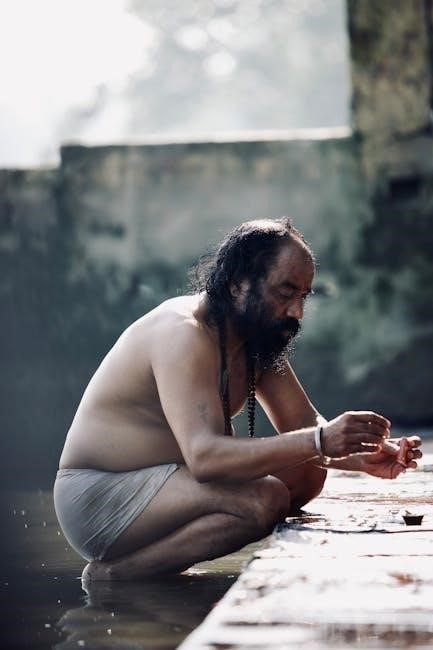
Numerous PDF guides explain various breathing techniques‚ emphasizing their impact on calming the nervous system and increasing vital energy. These practices‚ as described in translated PDFs‚ aren’t simply about physical control‚ but about influencing the prana – life force – to facilitate mental clarity and spiritual growth. Mastering Pranayama is key to unlocking higher states of consciousness.
Pratyahara (Withdrawal of the Senses)
Pratyahara‚ the fifth limb of Ashtanga Yoga‚ detailed in accessible PDF versions of the Yoga Sutras‚ signifies withdrawing the senses from external distractions. This isn’t suppression‚ but rather redirecting sensory input inwards‚ fostering inner awareness.
Many PDF guides explain techniques to cultivate Pratyahara‚ such as focusing on internal sensations or practicing mindful observation without judgment. Patanjali emphasizes that mastering this limb is crucial for controlling the mind‚ as external stimuli often dictate our thoughts and emotions. Through Pratyahara‚ as explained in translated PDFs‚ one gains mastery over the senses‚ paving the way for deeper meditative states.
Dharana (Concentration)
Dharana‚ the sixth limb of Ashtanga Yoga‚ as illuminated in numerous PDF resources of the Yoga Sutras‚ involves focusing the mind on a single point. This sustained concentration is a vital step towards achieving deeper meditative states.
PDF translations often detail techniques like focusing on the breath‚ a mantra‚ or a visual object. Patanjali’s teachings‚ readily available in PDF format‚ emphasize that Dharana requires consistent practice to overcome the mind’s natural tendency to wander. Mastering this skill‚ as explained in accessible guides‚ builds mental discipline and prepares the mind for the subsequent stage of Dhyana (meditation).
Dhyana (Meditation)
Dhyana‚ the seventh limb of Ashtanga Yoga‚ builds upon Dharana (Concentration)‚ as detailed in PDF versions of the Yoga Sutras. It’s a state of sustained‚ unbroken attention on the chosen object of focus‚ where the mind flows continuously without distraction.
Many PDF translations explain that Dhyana isn’t forced; it arises naturally when concentration becomes effortless. Patanjali’s teachings‚ accessible through digital resources‚ highlight the importance of cultivating a calm and stable mind. This meditative state‚ explored in various PDF guides‚ leads to profound self-awareness and a deeper understanding of consciousness‚ paving the way for Samadhi.
Samadhi (Absorption)
Samadhi‚ the eighth and final limb of Ashtanga Yoga‚ represents the culmination of the yogic path‚ extensively detailed within Patanjali Sutras PDF resources. It’s a state of complete absorption‚ where the distinction between the observer‚ the observed‚ and the process of observation dissolves.

PDF translations emphasize that Samadhi isn’t merely a mental state‚ but a profound transformation of consciousness. Patanjali describes various levels of Samadhi‚ from those with objectification to those without. Studying these nuances through accessible PDF versions offers insight into achieving pure awareness and liberation. It’s the ultimate goal‚ attainable through consistent practice‚ as outlined in the Yoga Sutras.

Practical Applications of the Sutras in Modern Yoga
Patanjali Sutras PDF resources bridge ancient wisdom with contemporary practice. Modern yoga often focuses on Asana‚ but the Sutras emphasize a holistic approach encompassing all eight limbs. Studying PDF translations reveals how ethical restraints (Yamas) and observances (Niyamas) cultivate a foundation for mindful living.
Applying the Sutras means integrating these principles into daily life‚ not just the yoga mat. PDF guides demonstrate how breath control (Pranayama) and sensory withdrawal (Pratyahara) prepare the mind for deeper meditation. Understanding Karma’s role‚ as detailed in PDF commentaries‚ encourages responsible action and self-awareness.
Resources for Further Study and PDF Downloads
Numerous online platforms offer Patanjali Sutras PDF versions‚ including translations by Swami Satchidananda and Edwin F. Bryant. Websites like sacred-texts.com and archive.org host digitized copies‚ facilitating accessible study. Searching for “Yoga Sutras PDF” yields a wealth of resources‚ though verifying translation accuracy is crucial.
For deeper exploration‚ consider academic databases and university websites offering scholarly interpretations. Several yoga schools also provide downloadable PDF study guides alongside their courses. Remember to respect copyright when downloading and distributing these materials. Exploring multiple PDF translations enhances understanding.
Potential Challenges in Interpreting the Sutras
Interpreting the Patanjali Sutras presents challenges due to their concise‚ aphoristic style and reliance on Sanskrit terminology. Different translations of the PDF versions can yield varying understandings‚ influenced by the translator’s philosophical perspective. The abstract concepts‚ like the three gunas and samadhi‚ require careful contemplation and contextualization.
Furthermore‚ the historical and cultural context is vital; modern readers may lack familiarity with ancient Indian thought. Relying solely on a PDF translation without supplementary study can lead to misinterpretations. A nuanced understanding necessitates exploring multiple commentaries and engaging with experienced teachers.
The Enduring Legacy of Patanjali’s Work
Patanjali’s Yoga Sutras‚ widely accessible today in PDF format‚ continue to profoundly influence yoga practice and philosophical thought. Despite being compiled centuries ago‚ the text’s insights into the human mind and path to self-realization remain remarkably relevant.
The eight limbs of yoga‚ detailed within the Sutras‚ provide a practical framework for ethical living‚ physical discipline‚ and mental cultivation. Numerous translations‚ available as PDF downloads‚ demonstrate the text’s adaptability across cultures and time. Its enduring legacy lies in offering a timeless guide to inner peace and spiritual growth‚ shaping modern yoga’s evolution.
Accessible in numerous PDF versions‚ Patanjali’s Yoga Sutras remain a cornerstone for those seeking self-understanding and spiritual liberation. The text’s systematic approach‚ outlining the Ashtanga Yoga path‚ provides a practical roadmap for navigating the complexities of the mind and achieving Samadhi.
Through ethical discipline‚ physical postures‚ and meditative practices‚ the Sutras guide practitioners toward a state of pure awareness. The availability of PDF translations by scholars like Satchidananda and Bryant ensures continued access to this profound wisdom‚ solidifying its role as an enduring guide to self-realization.